
Core thickness is one of the most misunderstood numbers in pickleball. It is not about strength or durability; it is about feel, and it dramatically changes how a paddle plays.
Quick answer: In pickleball paddles, thicker cores (16mm) give more control, a softer feel and greater forgiveness, while thinner cores (13mm) give more pop and power but less forgiveness. A 14mm core sits in between. Control players and beginners generally prefer 16mm; power players who want extra pop often choose 13mm.
What the core actually does
Nearly every modern paddle uses a polymer honeycomb core sandwiched between two faces. When the ball hits the paddle, the core compresses and rebounds. How thick that core is determines how much the ball sinks in, dwells, and springs back.
- Thicker core: the ball sinks in more and dwells longer, giving a soft, controlled, cushioned feel.
- Thinner core: the ball rebounds faster and harder, giving a poppy, powerful response.
13mm vs 14mm vs 16mm at a glance
| Thickness | Feel | Power | Control | Forgiveness | Best for |
|---|---|---|---|---|---|
| 13mm | Firm, poppy | High | Lower | Lower | Power players, put-aways |
| 14mm | Balanced | Medium | Medium | Medium | All-rounders |
| 16mm | Soft, plush | Lower | High | Higher | Control players, beginners |
Why thicker equals more control
It seems counter-intuitive that a thicker paddle gives less power, but the extra core depth absorbs energy rather than firing it straight back. That absorption is exactly what you want for the soft game: dinks that die in the kitchen, resets that take pace off the ball, and touch shots that land where you aim. The larger, more stable sweet spot also forgives off-centre hits.
Why thinner equals more pop
A 13mm core has less material to absorb energy, so it returns more of it to the ball. That means easier power on drives and put-aways. The trade-off is a smaller effective sweet spot and a harsher response on mishits, which can cost you control in delicate exchanges.
Which thickness should you choose?
- You are a beginner. Go 16mm. The soft, forgiving feel makes learning the control game far easier.
- You love the soft game and dinking. 16mm rewards your touch.
- You are a power player who finishes at the net. 13mm gives you the pop, if you can handle the smaller sweet spot.
- You want a bit of both. 14mm is a sensible middle ground.
How thickness pairs with face material
Thickness and face material work together:
- 16mm + carbon: maximum control and spin. A classic soft-game setup.
- 13mm + fibreglass: maximum pop and power. An aggressive setup.
- Hybrids mix and match to balance the two.
Read our companion guide on carbon vs fibreglass faces to complete the picture.
FAQs
Is a 16mm or 13mm paddle better? Neither is universally better. 16mm offers more control and forgiveness; 13mm offers more pop and power. Choose based on your style and experience.
What thickness is best for beginners? 16mm. The softer, more forgiving feel makes it easier to control the ball and learn the soft game.
Does a thicker paddle mean less power? Generally yes. A thicker core absorbs more energy, giving a softer, more controlled response rather than raw power.
What is a 14mm paddle good for? It is a balanced choice, offering a middle ground between the control of 16mm and the pop of 13mm. Good for all-round players.
Find your thickness
Compare thicknesses across our pickleball paddle range, and if you are still deciding on your overall setup, start with our paddle buying guide.
Gear up with AIXO
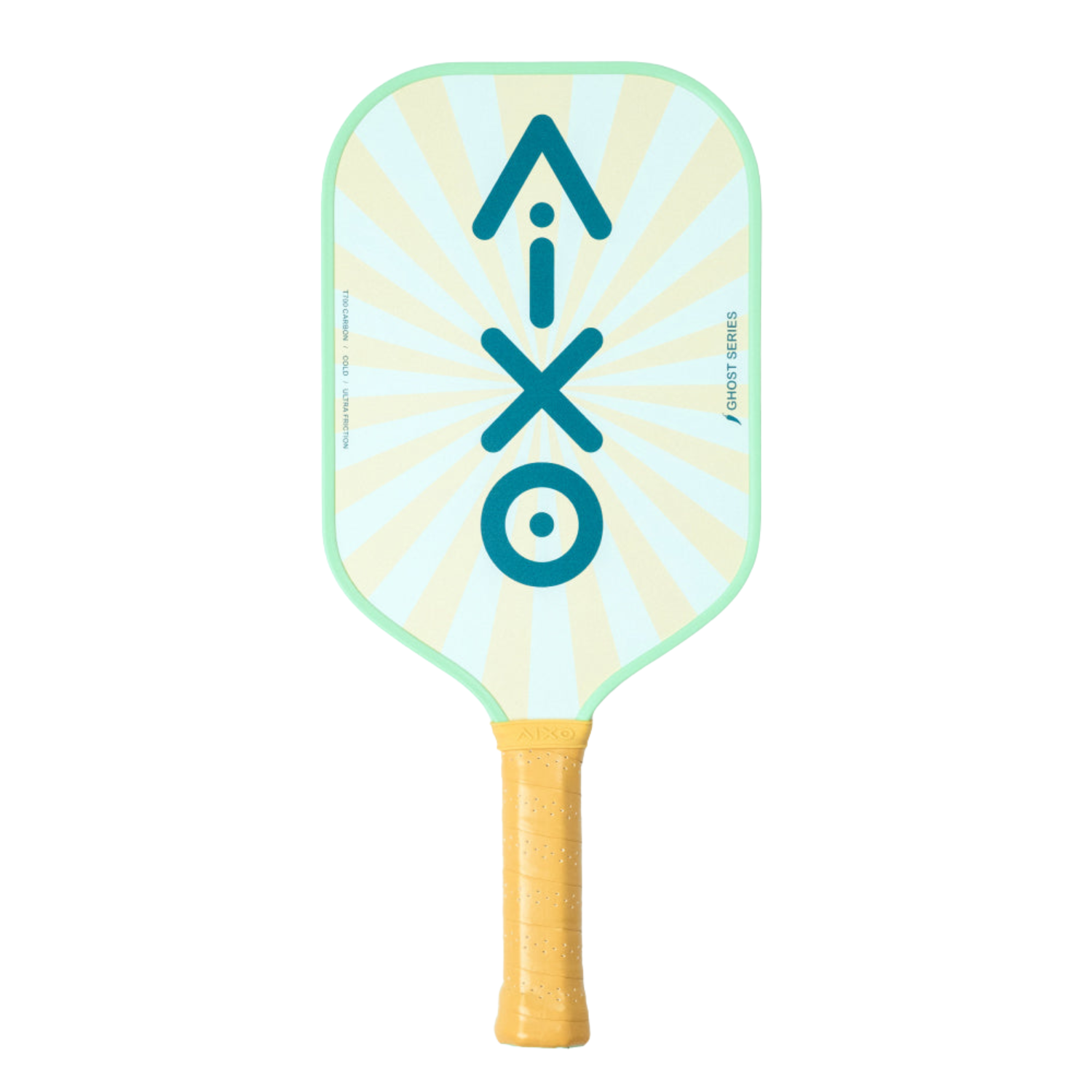
You can feel both ends of this spectrum in the AIXO range: the 16mm Ghost shows what a thick, plush core does for control, while the 14mm thermoformed Reaper demonstrates the faster, firmer alternative. Compare the whole paddle line-up side by side.
Shop this guide at Central Tennis
All in stock now, with expert stringing and racket fitting available in store.


Browse more: Pickleball · Grips and overgrips
Not sure what suits your game? Talk to our team — we fit, string and demo rackets every day.