
Handing over your racket for a restring can feel a bit mysterious if you've never done it — what do they ask you, how long does it take, and how do you know you'll get it back playing better than before? Here's exactly what to expect from a professional restringing service, so you can walk in knowing what you want.
Quick answer: A professional restringing service removes your old strings and fits a fresh set on a proper stringing machine, at a tension and with a string type matched to your game. You'll be asked about your string preference and tension; the stringer cuts out the old strings, mounts the frame, weaves and tensions the new string, ties it off and hands it back — usually within a short turnaround. The result is a racket that plays with restored control, feel, spin and comfort.
Why use a professional service?
Stringing looks simple; doing it well is a craft. A properly strung racket needs:
- A calibrated stringing machine for accurate, consistent tension.
- Correct mounting so the frame isn't distorted or stressed.
- Clean, even weaving and tie-offs for a string bed that plays true and lasts.
Get any of that wrong and you get uneven tension, a frame under strain, or strings that shift and die early. An experienced stringer gets it right every time — and can advise on what will actually suit your game, which is half the value.
The step-by-step process
Here's what happens once you hand over your racket:
- A quick chat about your game. What string do you like, what tension, any arm issues, how often you play, and what you're chasing (control, comfort, spin, durability).
- Cutting out the old strings. The old set is cut and removed — done carefully to avoid stressing the frame.
- Mounting the frame. Your racket is secured on the stringing machine and supported so it holds its shape under tension.
- Stringing the mains, then the crosses. The new string is threaded, weaved and tensioned to your chosen setting.
- Tie-offs and finishing. Knots are tied, ends trimmed, and the string bed straightened.
- A final check. The stringer checks the job and often logs your string and tension for next time.
The choices you'll make
| Choice | What to consider |
|---|---|
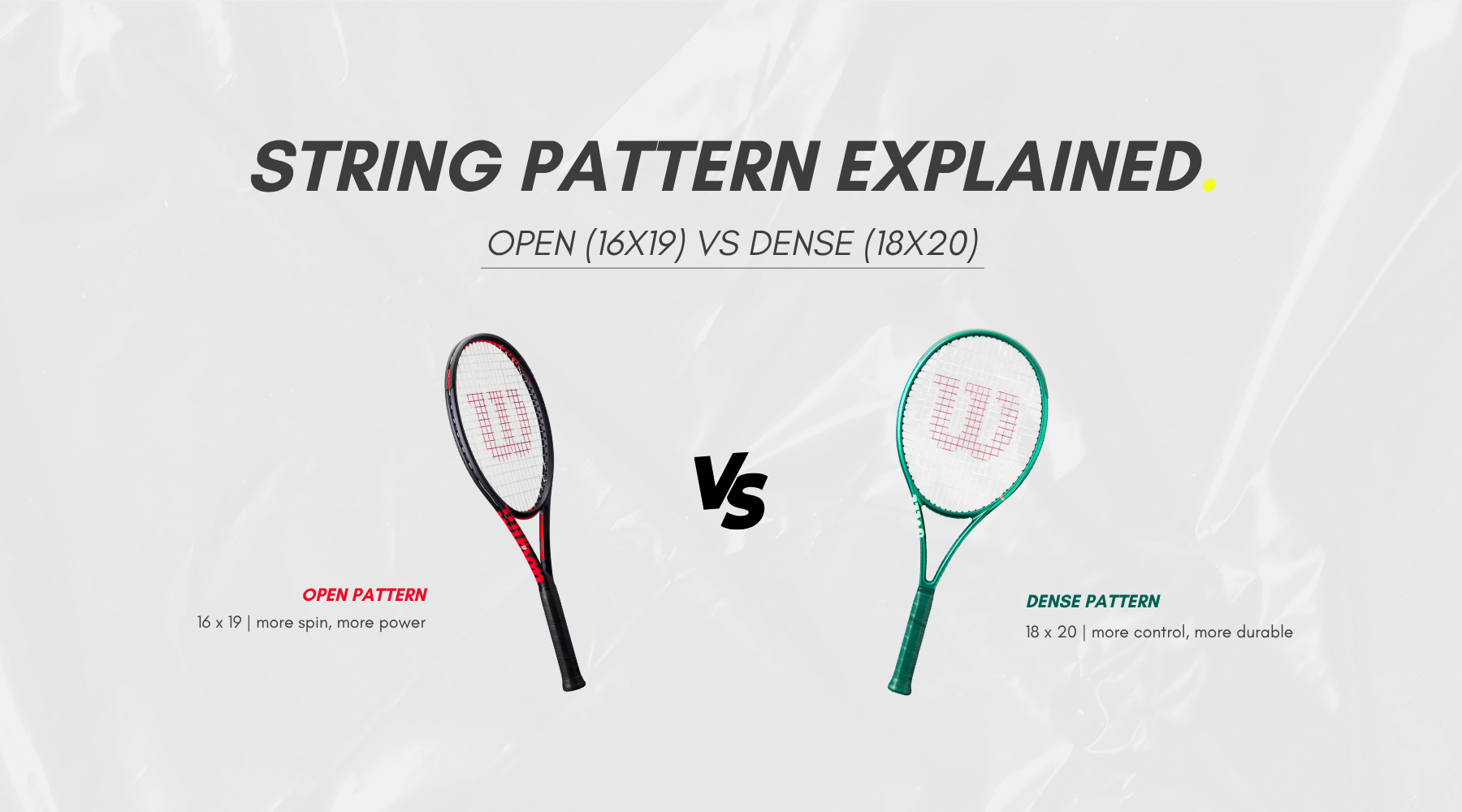
| String type | Poly (control/spin/durability), multifilament (comfort), natural gut (premium feel), or a hybrid |
| Tension | Higher = more control; lower = more power and comfort. |
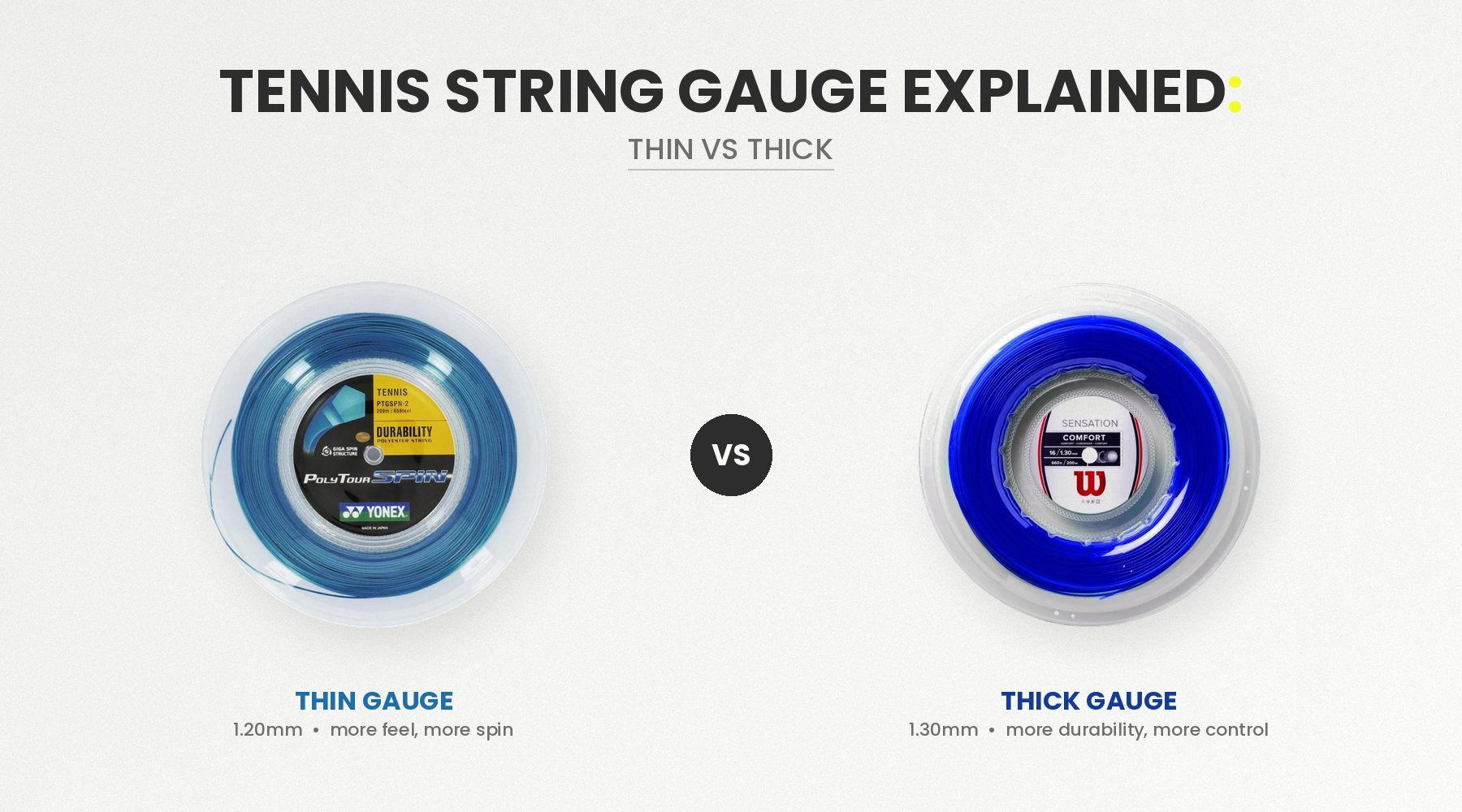
| Gauge (thickness) | Thinner = more feel/spin, breaks faster; thicker = more durable. |
| Hybrid or full | One string throughout, or two different strings |
Not sure? That's what the stringer is for. Tell us how you play and what your arm's like, and we'll recommend a setup. If comfort's a priority, softer strings at a lower tension are the way — see our tennis elbow guide. Curious about mixing strings? Read up on hybrid stringing.
How to get the best result?
A few things help us do the best job for you:
- Know your preferences, or ask for advice. Even "I want more control" or "my arm's been sore" tells us plenty.
- Mention how often you play. It guides string and durability choices — and remember, a good rule is to restring roughly as many times a year as you play per week. More in how often to restring.
- Say if anything's changed. New niggles, a different playing level, or a switch from singles to doubles can all shift what suits you.
- Keep a record. Once you find a setup you love, note it — or let us log it for you so every restring is identical.
Turnaround and looking after your racket
Turnaround depends on how busy we are, but a professional service aims to get your racket back to you promptly — often quickly for a standard job. Once it's freshly strung:
- Let it settle. Strings lose a little tension in the first day; that's normal.
- Store it sensibly. Avoid extreme heat or cold, which ages strings fast.
- Play it in. A fresh bed feels crisp — enjoy the restored control and feel.
Why local and specialist matters
Bringing your racket to a specialist means more than a machine and some string. It means advice from people who play, who'll match your setup to your game, flag if your grip size or frame is working against you, and keep a record so you get consistency year after year. That's what we do at our Birmingham store.
FAQs
How long does a tennis racket restring take? The stringing itself is a fairly quick job for an experienced stringer, though turnaround depends on how busy the shop is. Ask when you drop it off — we'll give you a realistic time, and many jobs are turned around promptly.
What string and tension should I choose? It depends on your game: control-focused players lean towards poly and higher tension; comfort-focused players towards multifilament and lower tension. If you're unsure, tell us how you play and we'll recommend a setup — that advice is part of the service.
Can you restring any rackets? Yes — we string all standard tennis rackets. If your frame is old or damaged, we'll check it's safe to string first, since stringing puts a racket under significant load.
How do I know when to restring again? Follow the play-per-week rule, and watch for dead feel, notching, loss of control or discomfort. See our full guide on how often to restring.
Ready to book? Explore our in-store stringing services, browse strings and rackets, or pop into our Birmingham shop and we'll sort your racket out properly.
Shop this guide at Central Tennis
All in stock now, with expert stringing and racket fitting available in store.


Browse more: In-store services · All tennis strings · Polyester strings
Not sure what suits your game? Talk to our team — we fit, string and demo rackets every day.