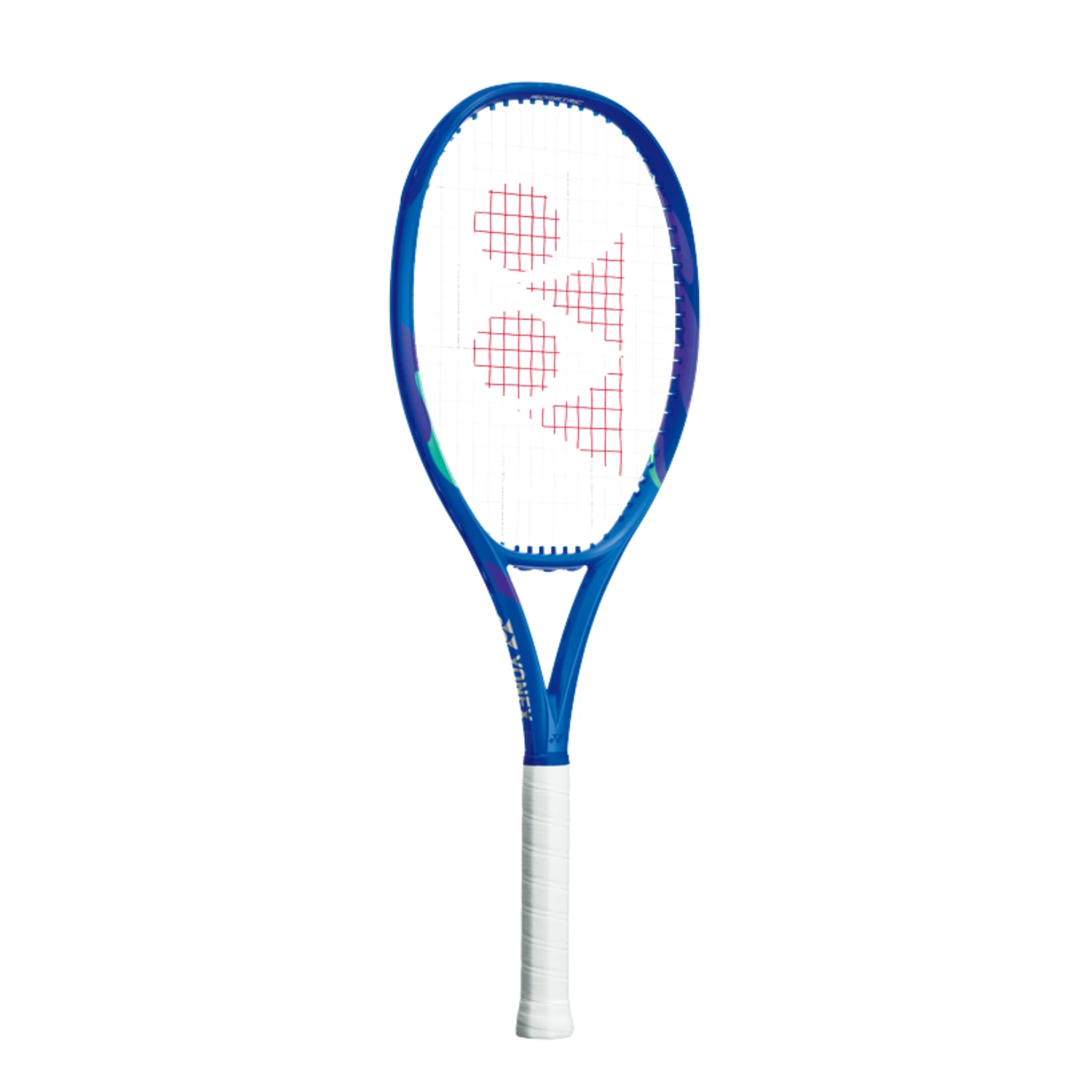

String tension is measured in pounds (lbs) or kilograms and printed on your racket as a recommended range. Where you sit in that range changes how the racket plays.
Lower tension = more power and comfort. Looser strings act like a trampoline, returning more energy to the ball and flexing more on impact (gentler on the arm). The trade-off is less control. Good for beginners, arm-sensitive players, and anyone wanting easy depth.
Higher tension = more control. Tighter strings deform less, giving a firmer, more predictable, more controllable response — favoured by advanced players who supply their own power. The trade-off is less comfort and more shock to the arm.
The spin myth. Contrary to popular belief, lower tension often produces slightly more spin with modern strings, because the strings can snap back more freely. Don't over-tighten chasing spin.
Where to start. String in the middle of your racket's recommended range, then adjust: dropping ~2 lbs for more power/comfort, raising ~2 lbs for more control. Small changes are noticeable.
Tension loss. All strings lose tension over time — polyester fastest. Even if you don't break strings, the setup goes "dead" and should be refreshed. See how often to restring.
Arm care. Sore elbow? Lower the tension and switch to a softer multifilament string — see our string type guide.
Get it strung right at Central Tennis — browse tennis strings and learn how often to restring.
Shop this guide at Central Tennis
All in stock now, with expert stringing and racket fitting available in store.


Browse more: Racket stringing and servicing · Tennis strings · Tennis rackets
Not sure what suits your game? Talk to our team — we fit, string and demo rackets every day.