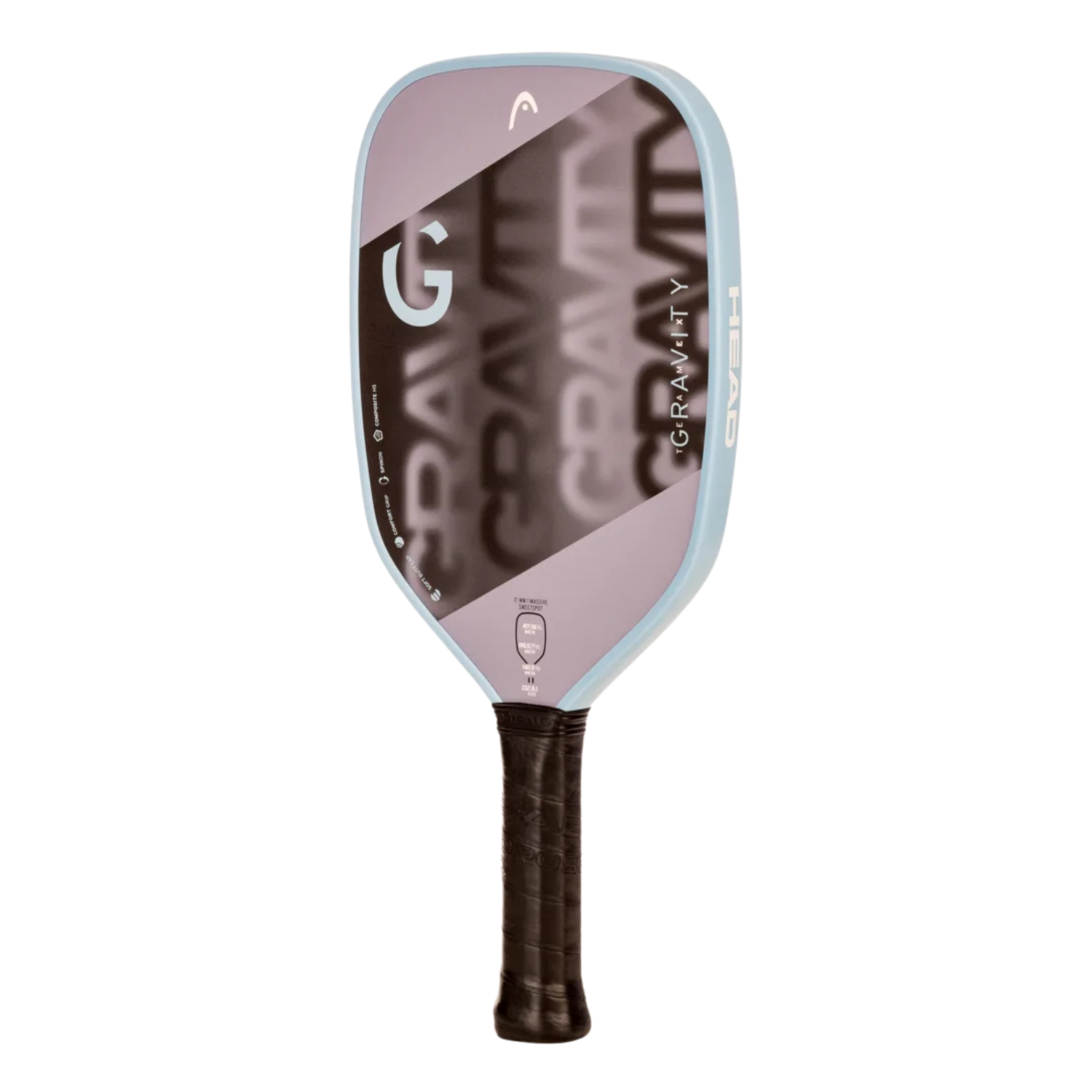

Two paddles with identical cores and faces can feel completely different in the hand, and the reason is weight and balance. Understanding these two factors helps you find a paddle that feels like an extension of your arm.
Quick answer: Lighter pickleball paddles offer faster hand speed, easier manoeuvrability and less arm strain, while heavier paddles offer more stability, drive and power. Balance describes where that weight sits: head-heavy paddles add power, head-light paddles add control and quickness. Most players suit a mid-weight, balanced paddle.
Why weight matters
Weight is a trade-off between speed and stability.
- Lighter paddles are quicker to swing and react with, ideal for fast net exchanges and gentler on the arm. The downside is less power and stability, and they can feel less planted on contact.
- Heavier paddles carry more momentum into the ball for extra power and stay steadier on off-centre hits. The downside is slower hand speed and more arm fatigue over long sessions.
| Weight | Pros | Cons | Best for |
|---|---|---|---|
| Lighter | Fast hands, manoeuvrable, arm-friendly | Less power, less stability | Net play, quick reactions, arm comfort |
| Mid-weight | Balanced power and speed | Master of none, but versatile | Most players, all-rounders |
| Heavier | Power, stability, planted feel | Slower hands, more fatigue | Power players, baseline drives |
Why balance matters just as much
Balance is about where the weight sits along the paddle, and it changes the swing feel even at the same overall weight.
- Head-heavy (weight towards the top): more power and drive, at the cost of quickness. It can feel like more "mass behind the ball".
- Head-light (weight towards the handle): faster and more manoeuvrable, ideal for quick hands at the kitchen line.
- Even balance: a versatile middle ground that suits most players.
Two paddles can weigh the same yet feel worlds apart depending on balance, so always consider both together.
How weight and balance affect your game
- Hand speed at the net. Lighter, head-light paddles win fast exchanges.
- Power on drives. Heavier, head-heavy paddles add drive.
- Arm comfort. Lighter paddles reduce fatigue and strain over long sessions, which matters if you have any elbow or shoulder niggles.
- Stability on mishits. Heavier paddles stay steadier when you catch the ball off-centre.
Which should you choose?
- You want fast hands and net control. Go lighter and head-light.
- You want power and stability. Go heavier and head-heavy.
- You are unsure or a beginner. Choose a mid-weight, balanced paddle. It covers every situation while you learn what you prefer.
- You have arm or joint concerns. Lean lighter to reduce strain.
Tennis players, take note
Coming from tennis you may be used to a heavier implement, but resist reaching for the heaviest paddle. Pickleball's fast net exchanges reward hand speed, and a lighter or mid-weight paddle helps you react in time while sparing your arm. Read our guide on making the switch from tennis.
Bringing it all together
Weight and balance work alongside core thickness and face material. A complete paddle choice considers all four: weight, balance, thickness and face. Start with our paddle buying guide to see how they combine.
FAQs
Should a beginner use a light or heavy paddle? A mid-weight, balanced paddle is usually best. It gives beginners enough power and stability without sacrificing too much hand speed, and it is comfortable to swing.
Does a heavier paddle give more power? Generally yes. The extra mass carries more momentum into the ball, adding drive, though it slows your hand speed and can tire the arm.
What does 'headlight' mean? It means the weight sits towards the handle, making the paddle quicker and more manoeuvrable, which is great for fast net play.
Can paddle weight cause arm pain? A paddle that is too heavy for you can contribute to arm fatigue and strain over long sessions. If you have any joint concerns, a lighter paddle is kinder.
Find your feel
Compare weights and balances across our pickleball paddle collection, and complete your understanding with our guides on paddle thickness and carbon vs fibreglass faces.
Gear up with AIXO
Specs only mean something when they are stated honestly – which is the whole premise of our house brand AIXO’s paddle range. If you would rather answer questions than read spec sheets, the Help Me Choose quiz weighs it all up for you, and a fresh AIXO overgrip is the cheapest way to fine-tune handle feel.
Shop this guide at Central Tennis
All in stock now, with expert stringing and racket fitting available in store.


Browse more: Pickleball · Aixo pickleball paddles · Head pickleball
Not sure what suits your game? Talk to our team — we fit, string and demo rackets every day.